Soft Power
Soft Power is not just an educational program; it is an experience-oriented learning approach that aims to help young people discover themselves, communicate, and learn to produce together. With this educational model, which we developed by drawing inspiration from Erasmus+ projects in Europe, voluntary work, and non-formal education methodologies, we aim to strengthen the social skills of young people, which often remain in the background in the traditional education system.
What is Soft Power?
In today's world, being successful is not limited to having technical knowledge alone. Now; being able to communicate, work in a team, demonstrate leadership, solve problems, and express oneself correctly has become just as important as academic success.
This is exactly where Soft Power education comes into play.
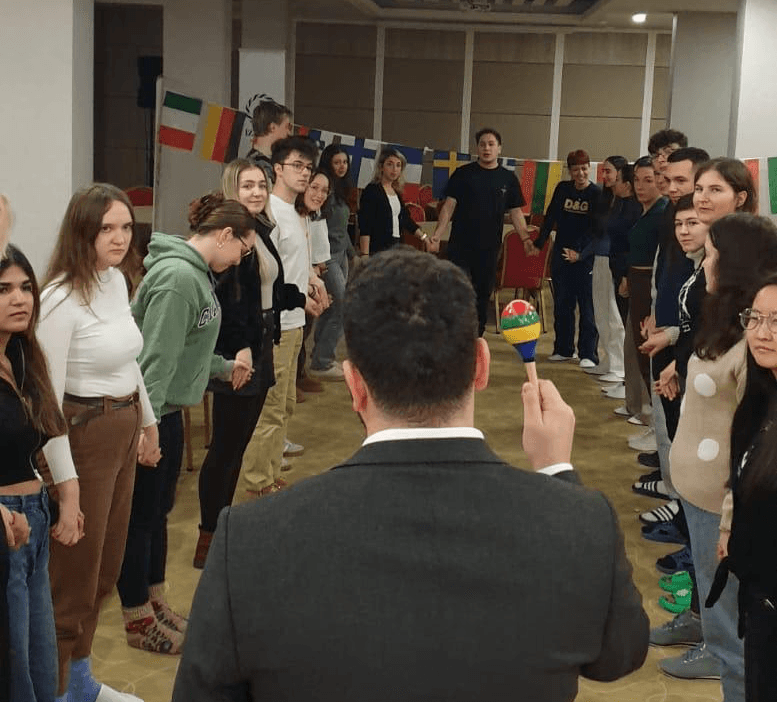
Instead of a traditional and passive understanding of education, we create a learning environment where young people are actively involved in the process, learn by experiencing, and discover their own potential. In our training, we put the "learning by doing" approach at the center.
Why is Non-Formal Education So Effective?
Although many young people today receive education for years, they can still struggle with public speaking, expressing their ideas, or taking responsibility within a team. This is because traditional education systems are mostly based on the transfer of theoretical knowledge.
Non-formal education, however, works differently.
This method:
supports experiencing instead of listening,
producing instead of memorization,
collaboration instead of competition,
and an active process instead of passive participation.
In Soft Power trainings, we use:
Group games,
Simulations,
Team tasks,
Problem-solving activities,
Reflection sessions,
and dynamic, creative practices.
The goal is not only to have fun, but to enable young people to develop skills they can use in real life through a natural process.
How Does It Benefit Young People?
Young people participating in Soft Power training do not just spend a day; they also discover new things about themselves.
Many participants realize that:
They express their ideas comfortably for the first time,
They are more visible within the team,
They can assume leadership roles,
And they build stronger communication with people.
Throughout the training, young people experience:
Stepping out of their comfort zone,
Taking responsibility,
Making decisions together,
Communicating in moments of crisis,
And thinking creatively.
At the same time, thanks to the self-evaluation and observation processes at the end of the training, young people can see their own strengths more clearly.
We Bring European Experiences to Turkey
At the core of Soft Power is not just theoretical knowledge, but direct field experience.
As trainers, we have taken active roles in Erasmus+ projects, volunteer work, and international training programs in Germany, Portugal, Hungary, and different European countries. We worked with people from different cultures, managed teams, and experienced non-formal education methodologies in the field.
Now, we are bringing this international experience to young people in Turkey.
Why Soft Skills?
According to the World Economic Forum, communication, teamwork, leadership, and problem-solving skills are among the most critical competencies of the future.
Therefore, we care about preparing young people not just for today, but for the future.
Because we believe that:
Young people who can express themselves are more self-confident.
Individuals who learn teamwork are more productive.
People with strong communication skills create a greater impact.
Leadership is not just about managing, but about being able to take responsibility.
More Than an Education
Soft Power aims not just to transfer knowledge to young people, but to provide them with an experience.
What matters to us is:
participation,
interaction,
awareness,
real experience,
and sustainable development.
Because we believe that successful teams are not a coincidence.
Recent Posts
News, Events and Announcements
Discover the most up-to-date articles and more.